
How LASIK Surgery Helps You Achieve Long-Term Vision Correction
Vision problems such as nearsightedness, farsightedness, and astigmatism affect millions of people worldwide. Many individuals rely on glasses or contact lenses to see clearly in their daily lives. However, modern medical advancements have made it possible to reduce or even eliminate the need for these corrective aids. One of the most effective and widely used procedures is LASIK surgery. It is designed to reshape the cornea of the eye so that light entering the eye focuses correctly on the retina, resulting in clearer and sharper vision. Over the years, LASIK surgery has become a trusted solution for people seeking long-term vision correction and greater freedom in their daily routines.
What is LASIK Surgery
LASIK surgery is a type of laser eye procedure used to correct common vision problems. The term LASIK stands for Laser-Assisted In Situ Keratomileusis. In simple terms, it is a process that uses a precise laser to reshape the clear front part of the eye called the cornea. The cornea plays an important role in focusing light properly. When it has an irregular shape, vision becomes blurry or distorted. LASIK surgery corrects this shape so that light is properly directed to the retina, improving vision clarity. The procedure is known for being quick, safe, and highly effective for many patients who meet the required conditions.
How LASIK Surgery Works
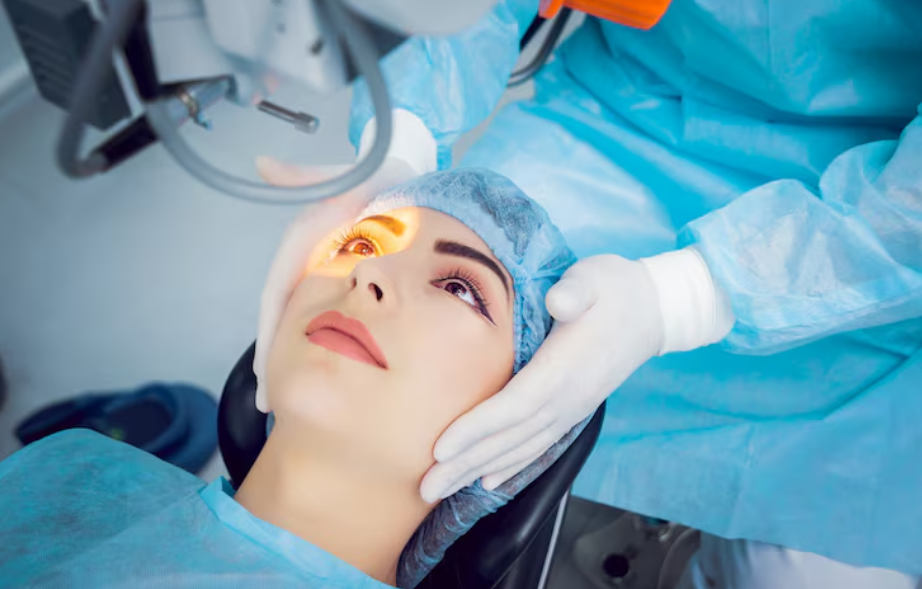
The process of LASIK surgery begins with a detailed eye examination to determine whether a person is a suitable candidate. During the procedure, the surgeon creates a thin flap on the surface of the cornea. This flap is gently lifted to allow access to the underlying corneal tissue. A specialized laser is then used to reshape the cornea with high precision. The laser removes microscopic amounts of tissue to correct the way light is focused inside the eye. Once the reshaping is complete, the flap is placed back in position, where it naturally heals without the need for stitches. Most patients notice improved vision within a short period, often within a day or two after LASIK surgery.
Long-Term Vision Correction Benefits
One of the biggest advantages of LASIK surgery is its long-lasting results. Many people experience stable vision for years after the procedure, reducing or eliminating the need for glasses or contact lenses. This long-term improvement allows individuals to enjoy daily activities such as reading, driving, and sports without visual aids. LASIK surgery also offers convenience, as it removes the ongoing cost and maintenance associated with glasses and contact lenses. Another important benefit is improved quality of life. People often feel more confident and comfortable when they no longer depend on corrective eyewear. In many cases, the results of LASIK surgery remain stable, provided the eye prescription does not change significantly over time due to aging or other factors.
Who Can Benefit and Considerations
LASIK surgery is suitable for many adults who have stable vision prescriptions and healthy eyes. It is commonly recommended for people who are tired of relying on glasses or contact lenses for daily activities. However, not everyone is an ideal candidate. Individuals with certain eye conditions, very thin corneas, or unstable vision may not be eligible. A thorough consultation with an eye specialist is essential before deciding on LASIK surgery. The doctor evaluates eye health, prescription stability, and overall suitability to ensure safe and effective results. Understanding the procedure and its expectations helps patients make an informed decision.
Conclusion
LASIK surgery has transformed the way vision problems are treated by offering a reliable and long-term solution for clearer eyesight. It provides freedom from glasses and contact lenses while improving overall visual comfort and daily convenience. With advanced laser technology and careful medical assessment, LASIK surgery continues to be a popular choice for those seeking lasting vision correction. For many people, it represents not just improved eyesight, but also a better and more confident quality of life.