What Are the Benefits of Makarasana (Crocodile Pose)?
Makarasana, or Crocodile Pose, is a very relaxed yoga position that is lying on your belly with your face down, your chest, shoulders, and back resting into the floor. A simple position to relax, lengthen and soften the back body, and inspire slow, steady breathing. It is usually done in between stronger poses or at the end of a sequence to recalibrate the body and quiet the mind.
Makarasana: Overview and Meaning of Crocodile Pose
The word Makarasana is derived from Sanskrit makara (crocodile) + asana (pose) or Crocodile Pose. It’s called this because of the shape and the quality of the posture – the body is low to the ground, stable and still – like a crocodile lying down at the edge of the water. Yoga translates to the Sanskrit term makarasana as “sitting on the lion’s seat” or “resting as a lion.Yoga literally means the Sanskrit word makarasana, which translates to the meaning of sitting or resting as a lion, and breathes in a calm and natural manner.
It is said that Makarasana is derived from Hatha Yoga and mentioned in later classical scriptures like Gheranda Samhita. It is generally used in modern yoga as a resting pose prone on the floor between stronger backbends, during therapeutic yoga classes or as a finishing pose to achieve a deeper relaxation. It is particularly relevant today for individuals who experience stress, shallow breathing and tension in the back due to extended periods of sitting.
In terms of anatomy, Makarasana is a resting prone posture, with the body lying face down with little muscle tension. This position balances the softening of the back, shoulders and neck with the gentle awareness of the breath, as the belly presses into the floor. Due to the full support of the ground, this pose is frequently employed to alleviate physical tension, facilitate deep breathing from the diaphragm and to promote the feeling of base and ease.
At a Glance
- English Name: Crocodile Pose
- Pronunciation: muh-kuh-RAHS-uh-nuh
- Start position: Resting position, sternum facing forward.Pose: restorative, sternum facing forward.
- Level: Beginner
- When to Practice: End of practice, between stronger prone poses, any time you need rest.
- Primary benefits: Relaxation, mindfulness of the breath, release of the back, stress release.
- Materials Required: Yoga Mat, a blanket/cushion is optional to make it more comfortable
- Practice: Common in Hatha Yoga, Restorative Yoga, and therapeutic yoga
The Advantages of Makarasana (Crocodile Pose)
Makarasana is a very simple and restorative posture that aids in releasing effort and relaxing the body. It is done on the back so the body is well supported, which makes it a common way to relieve tension, promote slower breathing and to provide a sense of grounding. The advantages of Makarasana are many such as:
The Physical Benefits of Makarasana
Supports the back body muscles to release tension in the back, shoulders and neck by relaxing them in a supported position. Promotes slow, deep breathing as the bottom of the belly touches the ground and awareness of the breath is felt. Holds lower back, and serves as a resting pose after stronger prone backbends like Cobra or Upward-Facing Dog. Encourages relaxation throughout the body without using strength, flexibility or active muscle work. Can assist in preparing for sleep when adopted as a relaxing posture at the end of the day or before evening.
They Provide Emotional and Mental Benefits
- Relieves stress and tension by creating a quiet, supported and still form for the body.
- Relaxes the mind through focusing on the natural flow of the breath.
- Provides stability and security as the feet are completely supported by the floor in the most prevalent form.
- May help to relieve mental tiredness by providing a rest between intense poses and/or at the end of practice.
Energetic Benefits
Supports grounding energy by resting close to the floor and a restful, inward-focused shape.
Helps to create space and stability in practice, a good position before breathwork or relaxation.
Makarasana is usually performed in a therapeutic manner to relax, observe the breath and release tension in the back, but not as a replacement for medical treatment for chronic pain or health issues. With good support and comfort, the pose becomes more effective, and more restful.
To reap the most benefits from your Makarasana practice, take a free 1-on-1 lesson with an expert Indian yoga coach now!
Step-by-Step Guide to Makarasana Yoga (Crocodile Pose)
Makarasana is a resting pose, which is easy to do and does not need a warm up. Used at the end of a sequence, between more powerful prone poses, or whenever you’d like a few minutes of supported rest and breath awareness.
Part 1: Preparing for the Pose
It’s important to check if you can lie comfortably on your stomach and breathe without strain before practicing Makarasana. Yoga mat, a folded blanket for additional padding or a little cushion in case the ankles or forehead is delicate.
Part 2: How to do Makarasana: Step-by-Step Instructions for Crocodile Pose
Start on your back on your mat with your legs straight back and your body relaxed.
Leave legs slightly apart if that is more comfortable and permit toes to turn out comfortably. Allow the lower body to get heavy. Commonly used in Crocodile Pose this relaxed leg position is used.
Bend elbows and place forearms or hands one on the other and place forehead on top. Alternatively, you can turn your head to the side if that doesn’t feel comfortable. Both are resting variations that are used.
Part 3:The pose should not be forced, but rather relaxed.
Observe the gentle compression of the belly towards the floor during inhalation and relaxation on exhalation. In the belly-to-floor contact, this is one of the reasons why Makarasana is used for awareness of breath and relaxation.
Hold in position for 3-5 minutes to relax overall, or as long as it feels comfortable.
To release, deepen the breath, move the fingers and the toes, roll gently to one side, push up. Slowly getting up after a deep rest allows for a gradual transition to avoid abrupt movements. A best practice cue that is based on guidance to restorative yoga.
During Makarasana, one should feel the body sink and relax, experience soft movement in the belly with in and out breathing. Others will also find that there is less tension in the back, neck, and shoulders. Do not experience strain in the neck, shortness of breath or discomfort from pressing too heavily into the floor.
Common Mistakes and Fixes
- Do not lift on the shoulders or strain in the neck, relax the upper torso completely.
- Don’t press the forehead down too hard, adjust the arms or turn the head if necessary.
- Do not attempt to be very still, but rather gently bring attention to the breath and allow you to become very relaxed over time.
Do not get up too quickly, but rather roll to one side and get up slowly. These are functional alignment and comfort indicators that come from restorative pose guidance.
Makarasana Variations
Makarasana is a basic restorative pose, and the most helpful adjustments are those that create greater ease and relaxation within the body. These basic variations can be helpful for the neck, chest and lower body and maintain the calming effect.
Classic Variations
1. Forehead on Forearms
This variation provides the head with a little more support and may seem more stable for longer holds.
- With face down and legs relaxed, legs are slightly apart.
- With arms bent, cross one forearm over the other.
- Place forehead on forearms.
- Slowly relax the entire body to relax the floor.
2. Head Turned to One Side
This is a basic one if lying down on the forehead isn’t comfortable. If you plan on staying longer, make sure to change sides.
- Lying on your belly, legs comfortably stretched out behind you.
- Hold arms extended forward or arms by side.
- Slowly rotate the head sideways.
- Move the shoulders to the other side and relax as you go through the middle of the hold.
- Restorative Variations
3. Makarasana with a Blanket
If it is not comfortable on a hard floor, consider adding a blanket that has been folded so that the pose is more comfortable.
- Under the hips, chest or ankles, put a folded blanket to support as necessary.
- While lying down, choose your favorite Makarasana arm position.
- Place head on hands or forearms.
- Pull blanket over the body so that there is complete support and relaxation.
4. Makarasana with a Cushion or Bolster
If lying flat on the belly feels restricted, this supported version may be helpful if it feels compressed on the chest.
- Rest chest with a small pillow or stuffed object.
- While lying on your stomach, relax and rest in the support.
- Place forehead on hands or forearms on top of each other.
- Continue slow natural breathing and relaxation of the body.
5. Bed-Supported Makarasana
In case the floor is too firm, Makarasana can be performed on a firm bed or other comfortable surface.
- Get on the bed or floor, face down, on something hard and soft.
- Pick the arm and head position that is most comfortable.
- Let the legs drop down and let the toes face outwards naturally.
- Breathe easily and relax the tension in the body for a few minutes.
Makarasana: Precautions and Contraindications in Crocodile Pose
Makarasana is calming and relaxing, but may need to be adjusted or eliminated if lying on the stomach is uncomfortable or restrictive.
Do not perform Makarasana If You Have
- Late-stage pregnancy – lying on the belly is not comfortable or appropriate.
- Recent abdominal surgery.
- A serious injury of the neck that causes trouble lying on your back.
- Any condition that interferes with easy breathing in the face lying down.
Caution and Modifications are practiced.
- Pregnancy: Some individuals may be able to use belly down positions during the early stages of pregnancy, but support and medical advice will be necessary. As the baby develops, resting position is normally a side-lying position which is preferable later in pregnancy. Here’s our comprehensive prenatal yoga guide!
- Neck pain: Place the forehead on top of the hands/forearms or turn the head to the side and alternate halfway through the hold.
- Large belly/bloating: Place a cushion or folded blanket under the chest or hips or rest in a different position as necessary.
- Severe back pain: Makarasana can be a therapeutic rest pose and if lying face down exacerbates pain come up out of the pose and choose a more comfortable one.
- Difficulty breathing or acid reflux: This pose may be easier if the chest is raised up on a bolster or folded blanket.
General Safety Guidelines
- Practice on an easy-to-use, supportive surface.
- Ensure that you can comfortably breathe during the posture.
- If any of the neck, chest, hips or ankles do not feel comfortable, you can use props.
- Avoid holding if it feels like a pressure or strain.
- Gradually pull out of the hold, particularly from a longer hold.
- Opt for comfort instead of striving for a strict fit.
If you don’t know if the pose is good for your body, start with guidance and support from a qualified teacher. Schedule a Free 1-on-1 session now!
Makarasana: Related Yoga Poses
If you like Makarasana (Crocodile Pose), give these Yoga Poses a try.
1. Child’s Pose (Balasana)
Provides a restful place to lay down and relax the spine and rest the mind.
- Sit on mat and touch big toes.
- Sit hips back toward the heels, and fold torso forward.
- Place forehead on mat or a block.
- Let the arms drop out to the front or arm side of the body, relax and breathe slowly.
2. Savasana (Corpse Pose)
Offers complete body relaxation, face up and is frequently used towards the end of yoga practices.
- Lying on your back with your legs spread apart.
- With arms by your sides, palms up.
- Close your eyes and let the entire body relax and melt.
- Keep breathing and relax.
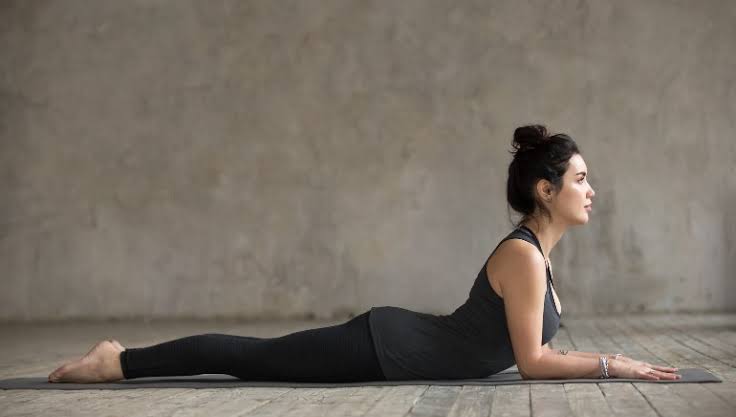
3. Sphinx Pose (Salamba Bhujangasana)
Introduces a soft chest opening and a mild backbend, while maintaining the groundness and support of the body.
- While lying on your front, with your legs stretched back.
- Elbows are under shoulders and forearms on mat.
- Press lightly on forearm and lift your chest.
- Relax your shoulders and take deep breaths.
4. Legs Up the Wall (Viparita Karani)
Sit with your legs held up against the wall.
Helps the body relax after activity or standing for extended periods, while promoting deep relaxation.
- Sit sideways next to a wall and lower onto your back.
- As you turn the torso down to the floor swing the legs up the wall.
- Rest arms at your sides.
- Hold the pose with relaxed and slow breathing.
5. Cat-Cow Pose (Marjaryasana-Bitilasana)
- Slowly returns movement to the spine after a period of rest during Makarasana.
- Get on your hands and knees, with wrists under your shoulders and knees under your hips.
- Breathe in to raise the chest and tailbone in Cow Pose.
- Round the spine and pull the chin toward the chest for Cat Pose as you exhale.
- Take slow breaths for a few rounds.
Frequently Asked Questions
How long is a good session of Makarasana?
Holding 1-3 minutes for quick rest in between poses. With standard relaxation hold 3-5 minutes. Hold for 5-10 minutes or longer for a deep therapeutic effect or when using to prepare for sleep. There’s no maximum – you can remain in Makarasana as long as comfortable. This is a resting pose with no action involved.
What are the contraindications for Makarasana?
There are few contraindications for Makarasana. Do not use in late pregnancy (during the third trimester) or following a major neck injury, or after recent abdominal surgery. Simple modifications can make it almost everybody’s exercise. It’s one of the most safe yoga poses.
Does Makarasana work for back pain?
Absolutely, Makarasana is a very therapeutic exercise for chronic back pain. In the prone position and with all muscles completely relaxed, the spine decompresses naturally. Tension is released by gravity. It is recommended for lower back pain, upper back pain and general spinal health. For therapeutic effect, practice 5-10 min a day.
Does Makarasana cure anxiety and stress?
Absolutely. Makarasana is a very relaxing posture for anxiety & stress. In the belly-down position, with gentle abdominal pressure, the vagus nerve is stimulated, triggering the relaxation response (parasympathetic). It lowers cortisol, slows heart rate and quiets racing thoughts. Great for reducing stress and anxiety.
Is it okay to do Makarasana in bed before retiring to bed?
Yes! Makarasana is great for sleep preparation and is suitable for use in bed. While lying face down on your bed, place your forehead on your hands and breathe deeply for 5-10 minutes. This helps to relax the nervous system and make you sleepy. It is especially